
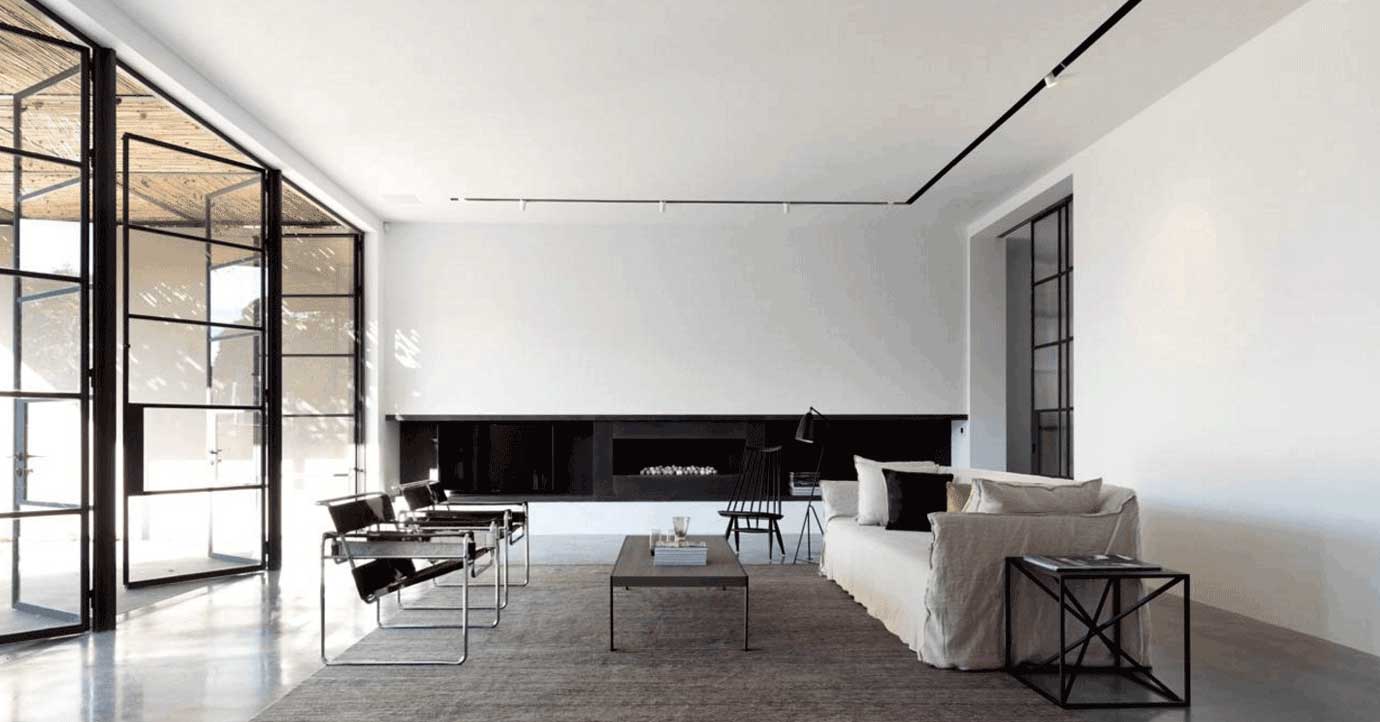
Mies van der Rohe did the opening to embrace minimalism. In fact, the expression “less is more” came from the German architect and educator, Le corbusier, who used glass, steel, and wide-open spaces to design his prosaic modern concepts. His use of crisp lines and well-placed rectangle shapes produced a sense of harmony. Probing into the theory of “less is more,” we need to rethink minimalism as not just a plain white box or cool, futuristic space, but as a concept that concurrently showcases extraordinary functional design while artistically creating an abridged way to live.
Minimalistic design commenced into the market in the 20th century as a retreat to traditional and overly wrought artistic details. In a nutshell, it is a design that’s denuded down to its primary purpose and character by excluding everything unnecessary. This pared-down aesthetic embodies simplicity at its best.
Designers from all fields started welcoming a simple, clean pattern. Cars, electronics, and architecture grew more modernized, a trend that extends in almost everything we acknowledge at present.
Image Source: Freshome
